
Introduction — a dim workshop, an honest count
I once stood in a low-lit shop where metal dust hung like pale ghosts; the hum of machines felt almost human. In that stillness I watched a laser marking fume extractor pull air like a patient beast, and I thought, we can do better. Data sits heavy in my notebook: small shops report visible smoke on 42% of marking jobs, and PM2.5 spikes by up to 60% during peak runs (simple sensors, clear alarm). So — what exactly stops us from fixing this cleanly and cheaply?
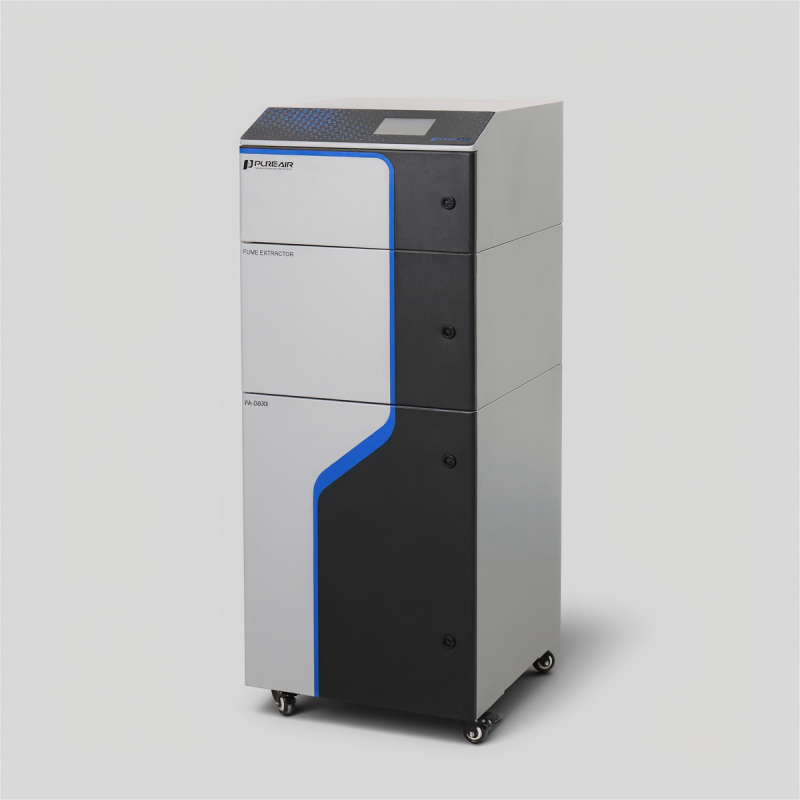
The scene is gothic, yes, but practical: a worker coughs, filters clog, productivity slips. I want to share what I’ve learned from the floor and the lab, and point a flashlight at the real problems. Follow me — I’ll walk through flaws, then forward to what actually helps.
Traditional Solution Flaws and Hidden User Pain Points
industrial air purifiers for smoke are often sold as a tidy answer: plug in, filter, breathe easy. Yet the reality is messier. Filters—HEPA filtration plus activated carbon—sound solid on paper, but they fail when airflow rate is wrong, or the capture hood is distant from the source. I’ve seen setups where VOC sensors never trigger because the intake was placed behind a cabinet. That’s not design. It’s theater.
Why do simple systems fail?
Technically speaking, a mismatch of capture velocity and ducting geometry kills performance. Fans with weak power converters cannot maintain consistent cfm under load. Maintenance is another hidden bite: change a filter? Fine — but only if the staff knows how. Look, it’s simpler than you think: without a clear maintenance plan, a high-efficiency filter becomes a paperweight. We see clogged pre-filters, bypass leaks, and sensors that drift. Those are the user pains that sales decks ignore.
New Technology Principles — a clear path forward
Let’s lift our gaze and talk new principles. Modern designs focus on source capture first: hoods that sit millimeters from the beam, coupled with variable-speed fans that adjust airflow rate in real time. Integrating VOC sensors and simple feedback makes systems adaptive. When I study real deployments, I look for three things: measured capture efficiency, real-time monitoring, and serviceability. If a unit lacks these, it will underperform.
What’s next for shops and plants?
We should embrace modular systems that let you scale: add a local fume hood here, upgrade to better activated carbon cartridges there, monitor particulate matter (PM2.5) with low-cost sensors. This isn’t sci-fi — it’s practical. Also, consider edge computing nodes to log events locally (useful when networks drop). The future I want is one where maintenance is predictable, performance is tracked, and operators trust the tools. — funny how that works, right?
Practical Takeaways and How I Evaluate Solutions
I’ll keep this short and useful. After working with multiple shops, I assess air cleaning solutions by three key metrics: capture efficiency at the source, ease of maintenance (filter swaps, access panels), and measurable monitoring (clear logs from VOC sensors or PM2.5 readings). If a system scores well on those, it usually survives the real world.
We must also weigh costs over time. A cheap extractor that gets replaced twice a year often costs more than a solid unit that lasts five years. I prefer designs with swappable modules, clear airflow specs, and vendor support that answers questions plainly. In my experience, that is the real measure of efficiency.
For anyone choosing tech today, start with a test: measure baseline PM2.5, run a trial with the capture hood in place, and track results for a week. Compare notes. If you need a practical example or vendor I trust, check out options from industrial air purifiers for smoke and evaluate against the three metrics above. I’ve seen solid outcomes when those boxes are ticked — small shops to larger lines, all improved.
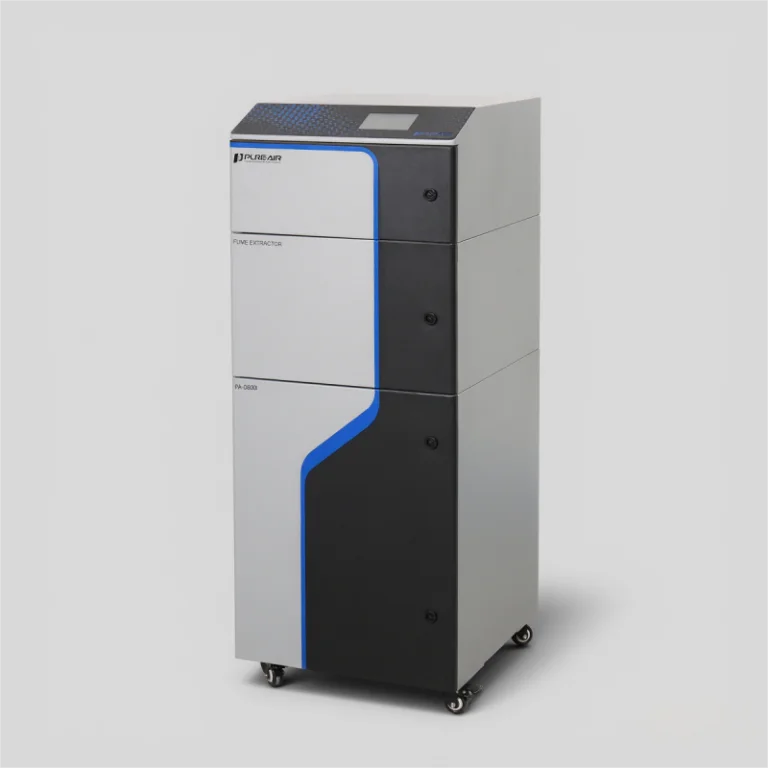
Final note: I’ve been in dusty bays and quiet labs; I’ve seen quick fixes fail and simple upgrades succeed. Choose systems that honor capture physics, make maintenance easy, and give you usable data. If you want a starting point, look to trusted manufacturers like PURE-AIR — they get the basics right and the details too.
